Chicago Build Expo 2026 Recap: What We Saw, and Why Estimators Stopped By
We’re back from Chicago, and it was a good one.
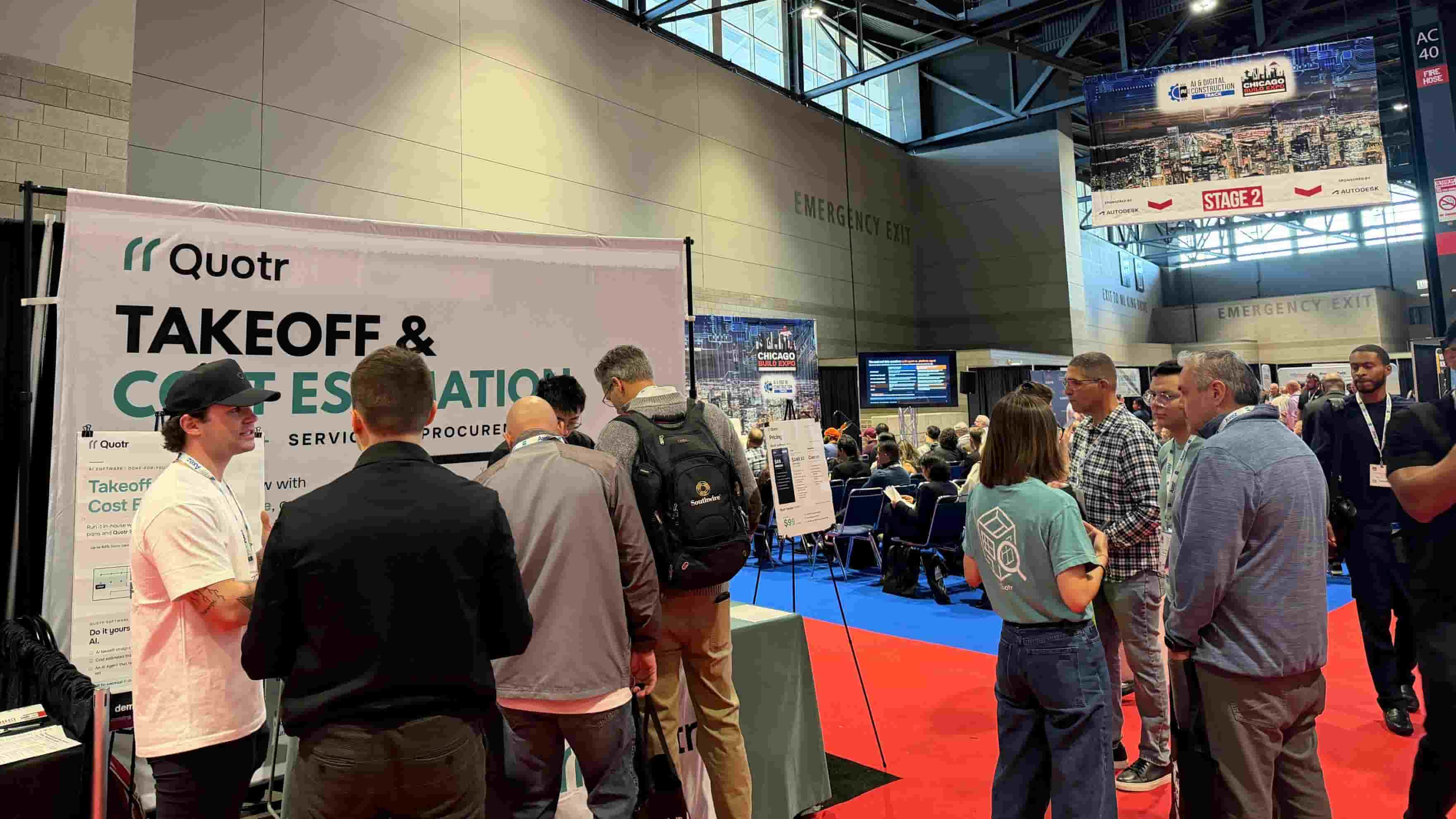
This week, Quotr was on the floor at Chicago Build Expo 2026, October 28 and 29 at McCormick Place. It’s one of the largest construction, architecture, and design shows in the country, and the room reflected it: contractors, estimators, GCs, developers, and trades from across the Midwest and beyond, all in one place for two days.
Here’s what the event looked like, and what we were doing there.
What Chicago Build was
If you haven’t been, Chicago Build is where a big slice of the AEC industry shows up at once. Two days of exhibits, plus stages running talks on construction tech, sustainability, the workforce, and where the industry is heading. It’s a working crowd, people who spend their days bidding, building, and running projects, which is exactly the room we want to be in.
Hanyang Liu on the automation panel
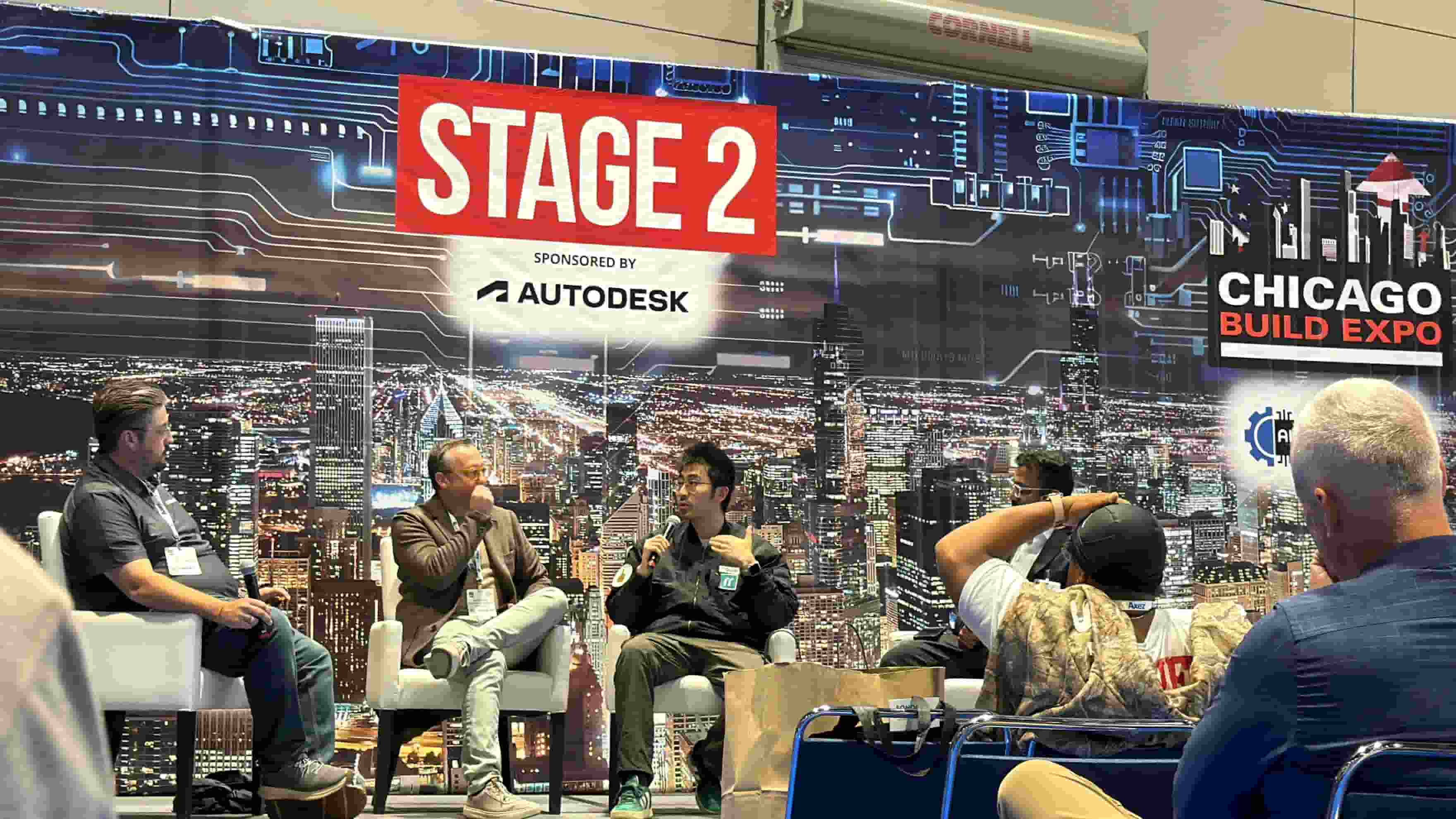
Our co-founder and CEO, Hanyang Liu, joined the panel “Robots, AI & Reality: The Pros and Cons of Construction Automation” on day two, on the AI & Digital Construction stage. It was a sharp group to think out loud with: chaired by Andrew Cooper (VDC Project Manager, AECOM Hunt Construction), alongside Lokesh Mani (Senior VDC Manager, RG Construction), Mayank Sharma (Director of Virtual Design and Construction, Mazzetti), and Andrew Wise (Design Phase Manager II, Mortenson).
“Pros and cons” is the right framing, and it’s exactly the conversation we want to be part of. The point Hanyang kept coming back to is the one we build around: the biggest win from AI in construction isn’t replacing people, it’s giving experienced estimators more leverage. Take the slow, repetitive reading and counting off their plate, and they get their time back for the parts that actually need judgment, scope, risk, and price. On a panel weighing where automation helps and where it doesn’t, that’s the line we think holds up.
At the booth: the takeoff and estimating draw
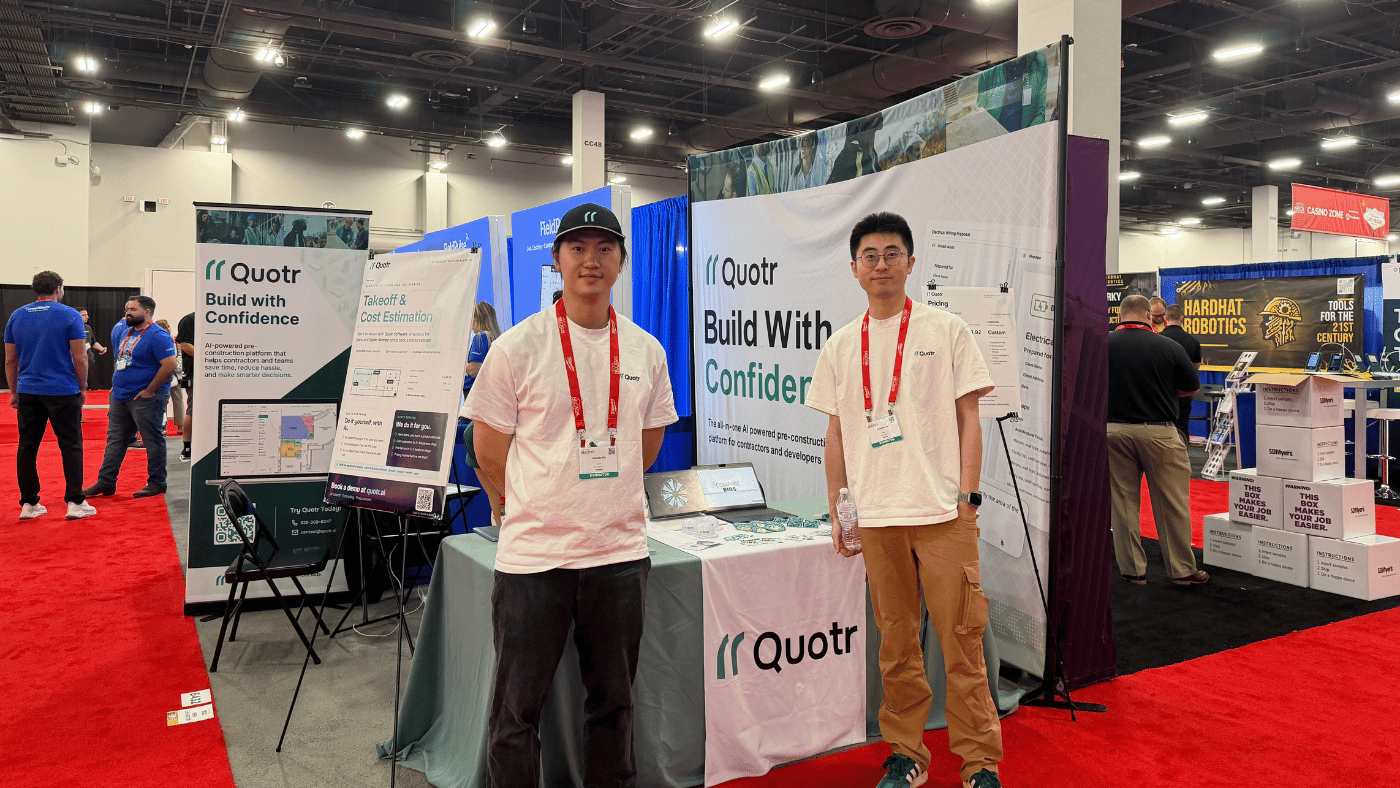
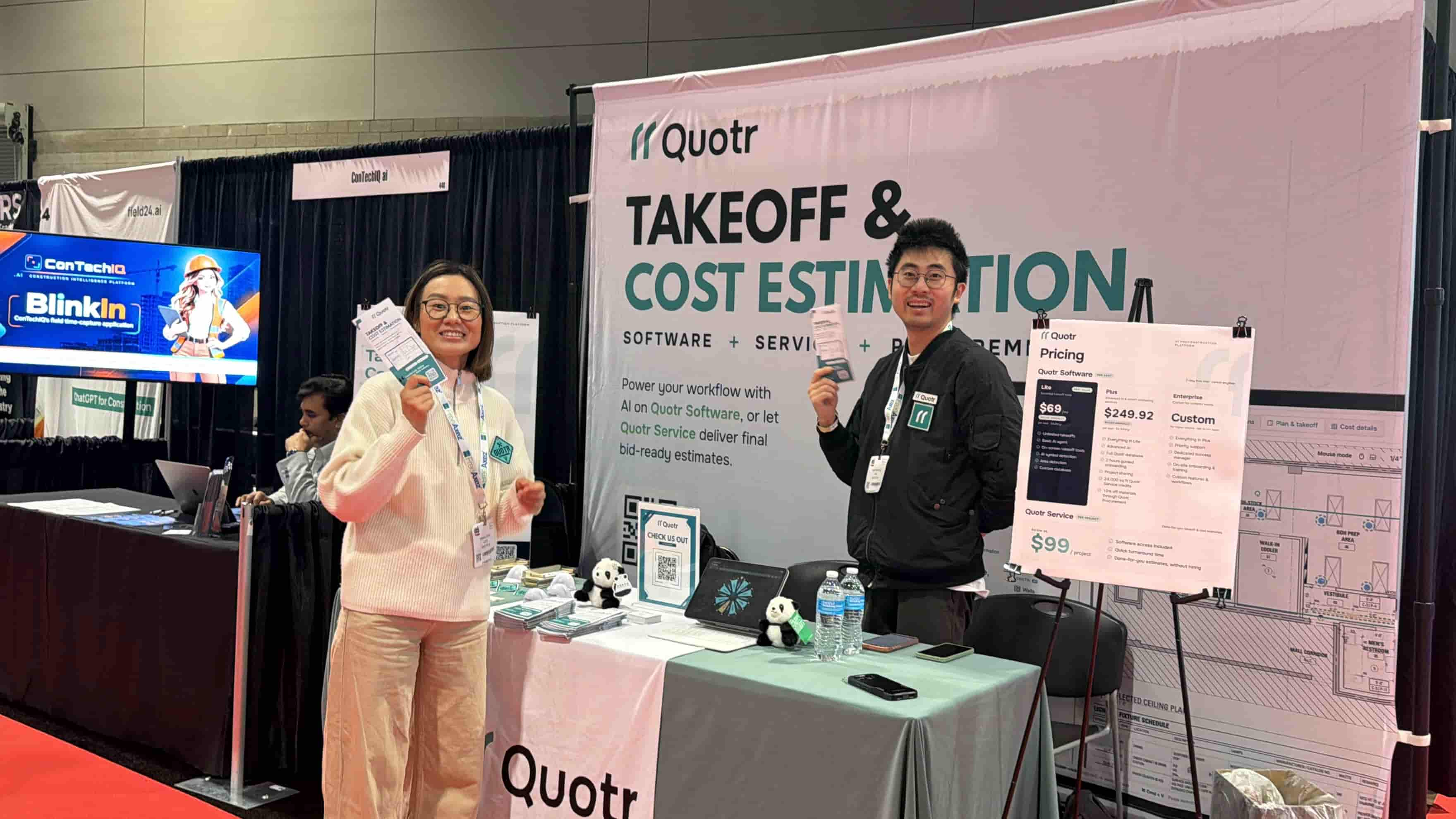
The best part of a show like this is the conversations, and we had a lot of them. More than 300 people stopped by Booth 450 to see what Quotr offers, and two things pulled them in over and over: AI takeoff and cost estimation.
But if you ask why they stopped, almost all of them came back to the same thing: they have more bids than they can get to. That is the story we heard again and again on the floor. An estimator has a stack of invitations to bid, a calendar full of deadlines, and only so many hours in the day to read drawings and count quantities by hand. Good work gets turned down, not because the team can’t win it, but because they can’t get the takeoff done in time to bid it. More than one person described the exact same squeeze: the work is there, the hours are not.
That is the problem Quotr is built to solve. The bottleneck in most shops is not judgment or pricing, it is the slow, repetitive first pass: paging through the set, measuring, and counting every symbol before you can put a number on the job. So that is what we kept showing at the booth. Upload a plan set, let the AI read it and take off the quantities, and carry those straight into a priced, bid-ready estimate, with every count traceable back to the sheet it came from. The payoff that landed with estimators was simple: get more bids out the door without adding more hours or more headcount. When your real constraint is capacity, a faster takeoff is not a nice-to-have, it is how you chase the work you’re currently leaving on the table.
A few themes came up again and again at the booth, and none of them will surprise anyone in the trade:
- Too many bids, not enough hours. This was the big one, the reason most people stopped in the first place. Teams want to chase more work but can’t take off fast enough to bid it all, so opportunities slip by.
- Capacity without more headcount. The follow-up question was almost always the same: can we bid more without hiring? That is exactly the gap Quotr is built to close, by taking the repetitive counting off the estimator’s plate.
- Interest in AI, with healthy skepticism. The next question was usually “how accurate is it, really?” Our answer is the honest one: the AI does the first-pass reading and counting, and the estimator reviews and owns the final number.
- Show me on my own plans. The demo that lands is the one run on a contractor’s own PDF, where they can see exactly how it fits their day, and their backlog.
Thank you
Thanks to the Chicago Build team for a well-run show, to everyone who stopped by to talk takeoff and estimating, and to the contractors who brought real projects and real questions. That’s still the best test there is.
If we talked in Chicago and you want to put Quotr on your own hardest plan set, that’s the standing invitation. Start a free trial or talk to our team. And if we missed you, we’ll be out at more shows through the season.
See you at the next one.
About Quotr.ai
Quotr.ai is an AI-powered construction estimation, takeoff, and procurement platform built for subcontractors, general contractors, and developers. Backed by Llama Ventures and based in San Francisco. Learn more at quotr.ai. The platform has three parts: Quotr Software (AI takeoff, estimating, and bidding, including the AI agent that reads your plans), Quotr Service (done-for-you cost estimates, takeoffs, and pro formas), and Quotr Procurement (factory-direct materials delivered door-to-door).